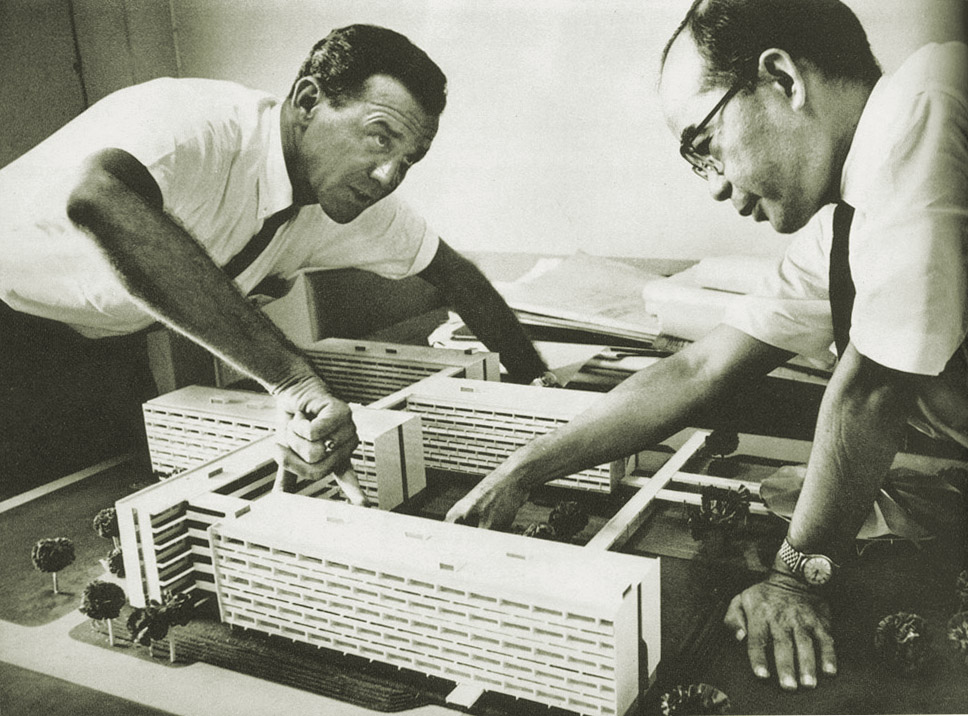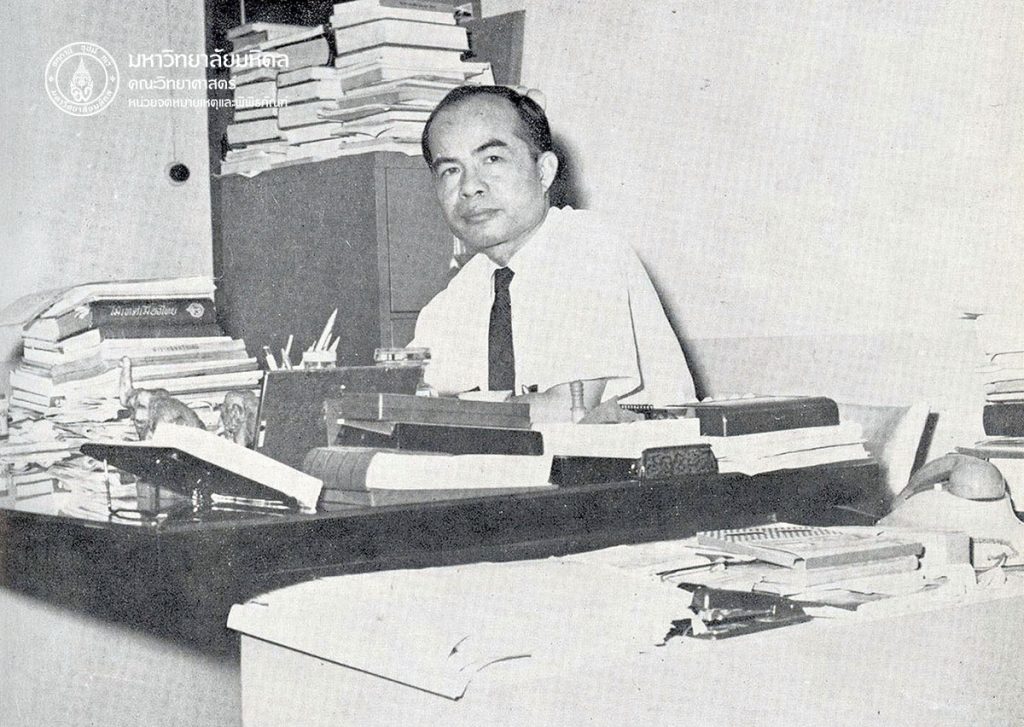

sitting on the wall of the executive meeting room at
Faculty of Science, Mahidol University, Bangkok, Thailand
Asian Biomedicine Vol. 2 No. 3 June 2008;241-244
History in Asian Medicine
The late Professor Stang Mongkolsuk: a role model as an excellent researcher, teacher, and visionary administrator
Amaret Bhumiratana
Department of Biotechnology, Faculty of Science, Mahidol University, Bangkok 10400, Thailand
To most Thais who knew him, Prof. Stang Mongkolsuk was a visionary administrator. To practically all of his students who were fortunate enough to have attended his lectures, he was an excellent teacher and a life-long mentor. But to the past and present members of the Faculty of Science, Mahidol University, Thailand, it was Prof. Stang’s commitment to research that fostered the research culture and research tradition that became the hallmark of the Faculty for succeeding generations.
Because of its commitment to research excellence, the Faculty of Science, Mahidol University is one of the best known scientific institutions in Thailand and in the Southeast Asian region. According to Thai Office and Thailand Research Fund, its current academic rank is high. This has resulted because the entire academic staff is immersed in the Faculty’s “research culture”. This creates a stimulating atmosphere whereby each member “feels” a strong commitment to excel in research performance from the day they joined the Faculty. This was the vision of Prof. Stang Mongkolsuk, the first and founding Dean of Faculty of Science. Prof. Stang was a researcher in organic chemistry. After finishing his doctoral degree in chemistry from the University of Liverpool (1950), he returned to Thailand and demonstrated his passion for research by initiating and developing an exciting program in the organic chemistry of natural products. Results of the work were published in internationally acclaimed journals [1-8]. For example, his research on the “connected” structure of an antibiotic from lichens was published in the Journal of the Chemical Society, while his indepth research on parasitic antagonists and other physiologically active compounds from Artrocarpus lakoocha, Diospyros mollis, and Garcinia handuryi were published in the Journal of the Chemical Society, Tetrahedron and Phytochemistry, respectively. His love for research as well as his emphasis on “quality research” and publication in “top grade” journals were traditions that Prof. Stang imprinted on the succeeding generations at the Faculty. No matter how involved in administration, his love and commitment to research never paled and he never detached himself from the laboratory. As Chairman of the Chemistry Department or Dean of the Faculty of Science, his laboratory was always next door to his office [9]. His “culture” to publish high quality research in peer review journals has led to the high academic ranking and the excellent international reputation of the Faculty of Science, Mahidol University.
According to Prof. Stang, “University staff must do research since they cannot maintain their academic excellence through teaching alone”. These were the principles behind the present day “research culture” at the Faculty of Science. These principles were applied when Prof. Stang received assistance from the Rockefeller Foundation to recruit overseas staff to come to Thailand for the development of various departments. All applicants were screened not only for their ability to teach, but also for their good research record. When scholarships were made available to send bright young Thai students to study abroad, Prof. Stang made sure that those selected were the best and the brightest that could be sent to complete doctoral degrees and return home with experience in conducting quality research. Being a researcher himself, Prof. Stang knew exactly how to prepare for the return of these young recruits from well known institutions. He had to provide well equipped laboratories, sufficient research funding and an excellent library (now named the Stang Mongkolsuk Library). It was this foresight and careful planning that laid the foundation for the Faculty of Science, Mahidol University to emerge as a leading research institution recognized as one of the best in Thailand.
In 1958, Prof. Stang was the director of a school that had been newly established to teach premedical students. He had a firm belief that an academic staff that could integrate instruction with experience of basic research in the life sciences, would be the most suitable teachers for pre-clinical students. The first class comprised 64 students destined for the new Medical School at Chiang Mai University. Two years later in 1960, Prof. Stang requested that the Thai Government transform the pre-medical school into the Faculty of Medical Science of Medical University at Siriraj Hospital to be located on 7.5 rai of land (corresponding to 12,000 m2) on Sri-Ayuthaya Road (presently the Faculty of Pharmacy, Mahidol University). In 1962, after the first two years of the medical curriculum, Prof. Stang requested assistance from the Rockefeller Foundation to set up a post-graduate study and research program in six preclinical departments, and in 1964 he began to develop the policy for setting up pre-medical departments at the Faculty of Medical Science in a manner that would be different from any other faculty in the country. The initial concept was to have students study a general pre-medical curriculum for two years and to followthis with a pre-clinical curriculum for another two years. It was projected that most students from this program would go on to medical school, but that a substantial number would elect to go on instead to doctoral degree programs from which they would then return to join the staff of the pre-medical departments.
In keeping with this new concept of the pre-clinical departments, the Government provided the budget to build a new Faculty of Science on Rama VI Rd. (the present location of the Faculty of Science, Mahidol University). His majesty King Rama IX laid the foundation stone on Thursday 19 th August 1965. The construction was completed in 1967 and His Majesty King Rama IX came to inaugurate the building on Monday 26th February 1968. Thus, the Faculty of Medical Science had operated from Sri-Ayuthaya Road for 8 years before the move to the new location on Rama VI Rd. Behind all of this was the underlying concept that staff of the pre-medical departments had to do research as well as teach, and thus promotion of a research environment and a research culture was fundamental with inception of the Faculty of Science, Mahidol University.
In implementing the new program, Prof. Stang worked together with Prof. James S. Dinning, a representative from the Rockefeller Foundation that supported the project with a 9.7 million US$ grant. At the beginning of the program, temporary staff was recruited from overseas to carry out teaching and research activities while scholarships were made available for Thai students to study abroad for doctoral degrees. Once graduated, these students would return to replace the temporary overseas staff. Prof. Stang pursuaded organizations such as the Thai Government, The Rockefeller Foundation, the Columbo Plan, the British Council and others to provide many scholarships for his students. In recruiting these Thai students, Prof. Stang always said that “The best brains should be researchers”. Thus, he sought the brightest students he could find, and many of these came from medical classes. Despite their initial choice, he successfully persuaded many medical students to become scientists instead. He succeeded in persuading 13 sets of students to join the program before he passed away in 1971. The phasing-out of overseas staff and phasing-in of returned Thai graduates continued until 1975.
From his very early research career, Prof. Stang firmly believed that successful pursuance of excellence in science required active participation in the international scientific community. Thus, there was a desire for the Faculty of Science to become “internationally recognized” as an important research institution. For this reason, it was considered that research results must be published internationally and that the staff, students and academic atmosphere must have an “international” focus. Prof. Stang achieved these goals by initiating international graduate programs at the Faculty of Science, Mahidol University.
Prof. Stang requested assistance from the Rockefeller Foundation to promote the graduate school at the Faculty of Science, Mahidol University. One of the staff of the Rockefeller Foundation, Prof. Albert S. Kuperman, spent six and a half years at the Faculty of Science, Mahidol University and wrote the following about Prof. Stang [9].
“In those early days of the Faculty of Science, Mahidol University, there is no doubt that the contributions of the Rockefeller Foundation in terms of financial and human resources, played an enormous role in moving the Faculty of Science, Mahidol University rapidly to the top tier of higher education in Thailand. But equally important, in my view, was the will, energy and sharp intelligence of the Dean, Dr. Stang Mongkolsuk. Stang persuaded the Rockefeller Foundation to provide generous and long term support for the Faculty of Science, Mahidol University; he selected the very best and brightest Thai scholars to attend universities in the USA and elsewhere in order to obtain doctoral level education and training in the biomedical sciences in preparation for appointment to the Faculty. He convinced the appropriate Thai officials to provide financial support for building and developing the institution; he interacted with the faculty and Chairs of various departments in ways that were motivational and helpful; he was skilled in getting people of different backgrounds to work collaboratively towards common institutional goals”.
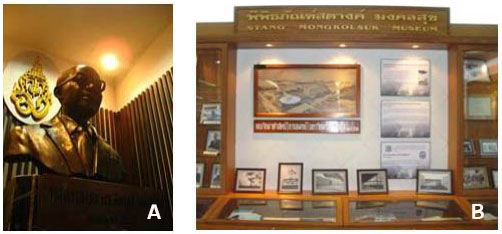
Fig.2 A bronze statute of Professor Stang Mongkolsuk situated at the 1st floor of Chemistry building
(A) and a corner of the Stang Mongkolsuk museum located on the second floor of the Stang Mongkolsuk library
(B), at the Faculty of Science, Mahidol University, Bangkok, Thailand.
Besides assisting with support for building laboratories and purchasing research equipment, the Rockefeller Foundation also provided support for establishment of a science library (presently known as the Stang Mongkolsuk Library) [11]. Also established was a central laboratory known as the Multidisciplinary Laboratory (MDL) to provide practical teaching assistance over a broad range of disciplines. The foundation for an international teaching program was laid down and included such things as use of English as the medium of instruction, development of active learning programs and use of the honor system. In addition, the various post-graduate programs included many foreign students from Indonesia, Malaysia, the Philippines and Burma and post-doctoral fellows from the USA, the UK, India, the Philippines and Australia [10]. The post-graduate program at the Faculty of Science has been a leader in training of research scientists in the South-East Asian region. Many new universities in Thailand employ graduates from the Faculty of Science, Mahidol University. These accomplishments are due mostly to the vision and planning of Prof. Stang who successfully persuaded the Thai Government and the Rockefeller Foundation to invest in establishment of an international teaching and research capability at the Faculty of Science, Mahidol University.
After successful recruitment of highly qualified research staff, and after implementing various programs to stimulate research activity, Prof. Stang also took care to insure research continuity and sustainability at the newly founded Faculty of Science. This was done through the setting up of long-term graduate programs in the life sciences leading to masters and doctoral degrees linked to the temporary overseas staff to insure that the returning of young staff would seamlessly replace their counterparts in an established international atmosphere. With ongoing research grant support and staff salary supplements, the research activities grew and strengthened. The program spun out graduates that could found research groups in other Thai universities, mostly in provinces outside Bangkok. Therefore, the research culture created by Prof. Stang at the Faculty of Science, Mahidol University also spread to other universities in Thailand.
Prof. F.M. Dean [9] was a very close friend of Prof. Stang from graduate school at the University of Liverpool and during his period as a SEATO Visiting Professor (1963-1964) when he helped to train many Thai outstanding chemists. He wrote of his memories of Prof. Stang Mongkolsuk during his return trip to Thailand as follows.
“This occasion (a visit to Thailand) was itself unforgettable, and for me a very emotional time. Some old friends were no longer with us and others were no longer active, but how rewarding it was to see the younger ones taking their places with enthusiasm and competence and Royal favor and moving into the future that Dr. Stang could only dream about”.
All members, past, present and future, of the Faculty of Science, Mahidol University owe much to their first and founding Dean, Prof. Dr. Stang Mongkolsuk not only for his vision but also for being a role-model of excellence in research, teaching and administration.
Acknowledgement
The author thanks Prof. T.W. Flegel and Assist. Prof. Buarong Lewchalermwongse for their critical readings of the manuscript.
References
1. Dean FM., Halewood P, Mongkolsuk S, Robertson A, Whalley WB. Usnic acid. Part IX. A revised structure for usnolic acid and the resolution of (±)-usnic acid. J Chem Soc (Resumed). 1953;1250-61.
2. Mongkolsuk S, Robertson A, Towners R. 2:4:3′:5′- Tetrahydroxystilbene from Artocarpus lakoocha. J Chem Soc. 1957; 2231-3.
3. Mongkolsuk S, Dean FM. Pinostrobin and alpinetin from Kaempferia pandurata. J Chem Soc. 1964; 4654-5.
4. Loder JW, Mongkolsuk S, Roberton A, Whalley WB. Diospyrol, a constituent of Diospyros molis. J Chem Soc. 1957;2233-7.
5. Mongkolsuk S, Sdarwonvivat C. 3-Methylana-phyhalene-1,8-diol from Diospyros mollis. J Chem.Soc. 1965;1533.
6. Ollis WD, Ramsay MVJ, Sutherland O, Mongkolsuk S. The constitution of gambogic acid. Tetrahedron. 1965;6:1453-70.
7. Mongkolsuk S, Dean FM, Houghton LE. Combretol from Combretum quadranyalare. J Chem Soc. 1966; 2:125.
8. Flashaw CP, Ollis WD, Ormand KL, Mongkolsuk S, Podimuang V. The spectroscopic identification of coniferin. Phytochemistry. 1969;8:913-5.
9. 30 years… Faculty of Science, Mahidol University, a memoir to celebrate thirty years anniversary of the Faculty of Science, Mahidol University.
10. 48 years… Faculty of Science, Mahidol University, a memoir to celebrate forty-eight years anniversary of the Faculty of Science, Mahidol University.
11. 72 years… Archan Vibhawan Manunapichu, a memoir to celebrate seventy-two years anniversary of Archan Vibhawan Manunapichu.
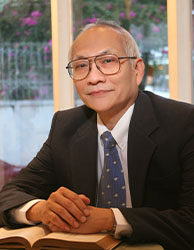
ศาสตราจารย์เกียรติคุณ ดร.อมเรศ ภูมิรัตน
ได้รับรางวัล “นักวิทยาศาสตร์ดีเด่น” มูลนิธิส่งเสริมวิทยาศาสตร์และเทคโนโลยีในพระบรมราชูปถัมภ์ สาขาเทคโนโลยีชีวภาพ ประจำปีพุทธศักราช 2535 อดีตคณบดีคณะวิทยาศาสตร์ มหาวิทยาลัยมหิดล พ.ศ. 2542-2546 และ พ.ศ. 2547-2550

แก้ไขข้อมูลล่าสุด: 4 มิถุนายน 2569